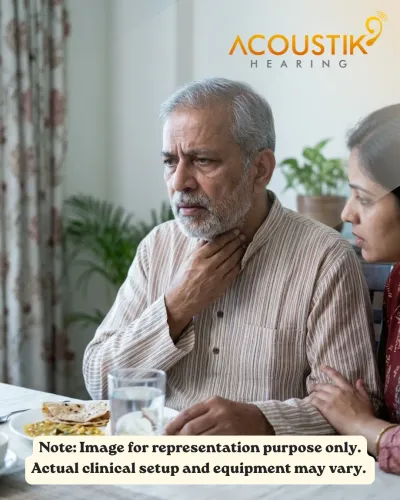


Does a person's speech sound slurred, weak, slow, strained, or unusually quiet? Do they struggle to control their voice, speech rate, or the coordination between breathing and speaking? These may be signs of dysarthria — a motor speech disorder that occurs when neurological problems affect the muscles and movements needed for speech.
What Is Dysarthria?
Dysarthria is a motor speech disorder caused by weakness, abnormal muscle tone, reduced coordination, or impaired control of the muscles involved in speaking. These may include the lips, tongue, jaw, palate, vocal folds, and breathing muscles.Speech depends on precise coordination between respiration, phonation, articulation, resonance, and prosody. When the nervous system cannot control these functions effectively, speech may become difficult to understand.Unlike Childhood Apraxia of Speech, which primarily involves planning and programming speech movements, dysarthria is mainly associated with difficulty executing and controlling speech movements.
Common Signs to Watch For
- Speech
that sounds slurred or unclear
- Slow,
rapid, or irregular speech rate
- Weak,
breathy, strained, or rough voice
- Reduced
loudness or unusually soft speech
- Difficulty
controlling pitch or loudness
- Imprecise
pronunciation of sounds
- Reduced
movement of the lips or tongue
- Changes
in speech clarity when tired
- Monotone
or reduced variation in speech
- Difficulty
coordinating breathing and speaking
- Nasal-sounding
or altered resonance
- Reduced
overall speech intelligibility
- Difficulty
communicating effectively in conversations
The pattern of symptoms can vary depending on which parts of
the nervous system are affected.
What Causes Dysarthria?
Dysarthria can occur when conditions affect the brain,
spinal cord, or nerves controlling the muscles involved in speech. Possible
causes include:
- Stroke
- Traumatic
brain injury
- Cerebral
palsy
- Parkinson's
disease
- Multiple
sclerosis
- Motor
neuron disorders
- Brain
or neurological disorders
- Certain
genetic or degenerative conditions
In some situations, speech changes may appear suddenly. Sudden
unexplained difficulty speaking requires urgent medical assessment,
particularly when accompanied by other neurological symptoms.
Different Types of Dysarthria
Dysarthria can be classified according to the neurological
system affected. Common clinical types include:
- Flaccid
dysarthria – associated with weakness or reduced muscle control
- Spastic
dysarthria – associated with increased muscle tone and stiffness
- Ataxic
dysarthria – associated with impaired coordination
- Hypokinetic
dysarthria – commonly associated with reduced movement, such as in
Parkinson's disease
- Hyperkinetic
dysarthria – associated with involuntary or excessive movements
- Mixed
dysarthria – features of more than one type may occur together
Classification helps clinicians understand the speech
characteristics and possible neurological involvement.
How Is Dysarthria Evaluated?
A speech-language professional may assess:
- Speech
intelligibility
- Respiratory
support for speech
- Voice
quality and loudness
- Pitch
and pitch variation
- Articulation
accuracy
- Speech
rate and rhythm
- Resonance
- Oral-motor
function
- Coordination
of speech movements
- Connected
speech and conversational communication
The clinician may examine how speech changes during sustained
sounds, single words, sentences, reading, and spontaneous conversation.
A hearing evaluation may also be recommended because hearing
difficulties can affect communication and may make speech harder to understand.
Depending on the individual's symptoms, referral to a neurologist,
ENT specialist, pediatrician, or other medical professional may be
appropriate.
Why Early Identification Matters
Dysarthria can affect communication at home, school, work, and in social situations. A person may know exactly what they want to communicate but struggle to make their speech clear enough for others to understand.Early assessment can help identify the nature of the speech difficulty and determine appropriate strategies to improve functional communication.
Can Dysarthria Be Treated?
Treatment depends on the underlying cause, type and
severity of dysarthria, and the person's communication needs.
Speech therapy may focus on:
- Improving
speech intelligibility
- Strengthening
or improving control of speech-related movements when clinically
appropriate
- Controlling
speech rate
- Improving
voice loudness and quality
- Improving
articulation
- Coordinating
breathing and speaking
- Developing
effective communication strategies
- Using
gestures, writing, or alternative and augmentative communication when
appropriate
- Helping
family members and communication partners understand and support the
individual's speech
There is no single treatment approach for every person.
Therapy is individualized according to assessment findings and functional
communication goals.
Dysarthria in Children
Children with neurological or developmental conditions may also experience dysarthria. Their speech may be difficult to understand, unusually slow or fast, weak, or poorly coordinated.A pediatric speech-language assessment can help distinguish dysarthria from articulation disorders, phonological difficulties, Childhood Apraxia of Speech, language disorders, and hearing-related communication difficulties.Early intervention can support clearer and more effective communication as the child develops.
What We Offer At Acoustik Hearing and Speech Clinic, our speech-language professionals assess speech, articulation, fluency, voice, and communication difficulties and determine whether further evaluation for a motor speech disorder such as dysarthria may be appropriate.
Where required, hearing assessment can also help identify
hearing difficulties that may contribute to communication challenges. Based on
the findings, an individualized speech therapy and communication-support plan
can be recommended.
For individuals who have difficulty travelling, Acoustik
Hearing and Speech Clinic provides selected audiology services at home,
including pure tone audiometry and hearing aid trials.
Book a speech evaluation at our clinic or enquire about
our home-based audiology services across @Mumbai, @Navi Mumbai, and @Thane.
#Dysarthria #MotorSpeechDisorder #SpeechTherapy
#SpeechLanguagePathology #SpeechAssessment #VoiceDisorders
#NeurologicalSpeechDisorders #PediatricSpeechTherapy #SpeechTherapyMumbai
#SpeechTherapyNaviMumbai #SpeechTherapyThane #AudiologyMumbai #AcoustikHearingAndSpeechClinic
Follow us for more info on #HearingCare
https://www.facebook.com/acoustikhearingandspeech
https://www.instagram.com/acoustikhearingandspeech
https://twitter.com/Acoustikhearing
https://in.linkedin.com/company/acoustikhearing
https://www.youtube.com/@AcoustikHearing
https://www.acoustikhearing.com
https://www.hearingaidinmumbai.in
People also searched for
Hearing | Hearing Aid | Hearing Aid Dealer | Hearing Aid Dealers | Hearing Aid Clinic | Hearing Services | Hearing Aid Service | Hearing Aid Repair | Audiologist | Audiogram | Hearing Clinic | Digital hearing Aid | Bluetooth Hearing Aid | Waterproof Hearing Aid | Invisible Hearing Aid | CIC Hearing Aid | BTE Hearing Aid | ITC Hearing Aid | Rechargeable Hearing Aid | IIC Hearing Aid | Phonak | Unitron | Widex | Starkey | Resound | Oticon | Phonak Hearing Aid in Mumbai | Unitron Hearing Aid in Mumbai | Widex Hearing Aid in Mumbai | Starkey Hearing Aid in Mumbai | Resound Hearing Aid in Mumbai | Oticon Hearing Aid in Mumbai | Phonak Hearing Aid | Unitron Hearing Aid | Widex Hearing Aid | Starkey Hearing Aid | Resound Hearing Aid | Oticon Hearing Aid | Best Hearing Aid in Mumbai | Best Price Hearing Aid In Mumbai | Signia | Signia Hearing Aid | Signia Hearing Aid in Mumbai | Hearing Machine | Kanachi Machine | Latest Hearing Instrument | Advanced Hearing Aid | Latest Hearing Aid | Kan ki machine | Affordable hearing aids in Mumbai | Hearing Aid On EMI | Hearing Aid On installment | Hearing aid on 0% EMI | Hearing Aid Price in Mumbai | Free Home Hearing Test | Free Home Hearing Trial | Siemens Hearing Aid Price In Mumbai | Hearing aid clinic in Mumbai | Hearing Aid Center near me | Free Hearing Aid in Mumbai | Hearing Aid Near me | Hearing Aid for Senior Citizen